

Everyday household products that may contain endocrine disruptors
Introductory video: Why is our health changing?
1 Introduction: The Invisible Enemy on Your Nightstand
From the shower gel you use when you wake up to the cosmetics and plastic containers you touch daily, your environment is saturated with substances that "hack" your endocrine system. They don't act like traditional poisons, but as biological impostors that confuse your cells.
Current science, led by researchers like Dr. Nicolás Olea at the University of Granada and backed by high-impact epidemiological studies in The Lancet, is connecting the dots. What we previously considered isolated cases of toxicity is now a systemic alteration. We're facing a public health crisis where everyday products are linked to the rise of modern diseases, altering our biology even before we have the chance to be born.
Scientific Alert
Endocrine disruptors are altering our biology from before birth, with effects that can persist for generations.

Representation of the synergistic effect of multiple interacting chemical substances
2 The "Cocktail Effect": 1 + 1 Doesn't Always Equal 2
Current chemical regulation makes a fundamental calculation error: it evaluates each substance separately, assuming that if a chemical is "safe" individually, it poses no risk. However, the European EDEN project and experts like Andreas Kortenkamp have demonstrated that we live in a chemical "soup" where effects add up additively.
Measuring a single component is like trying to predict the taste of a stew by analyzing just one grain of salt.
This phenomenon, known as the "Cocktail Effect," reveals that substances showing no effects separately can cause significant impacts when acting together. The concept of "dose addition" suggests that safety is illusory if the regulatory system ignores the real mixture of xenoestrogens in which we're immersed.
The EDEN Project
European research that demonstrated how multiple low-dose chemicals can have significant synergistic effects on the human endocrine system.
Additive Effect of Endocrine Disruptors
The combined effect of multiple chemical substances can far exceed the safety threshold, even when each chemical individually is below the limit.
3 The Prenatal Legacy: Your Health Was Decided Before Birth
Maximum vulnerability occurs in the womb. Research by Dr. Olea and findings from the EDEN project on Leydig cell function emphasize that fetal exposure to phthalates and bisphenols can "program" permanent reproductive disorders.
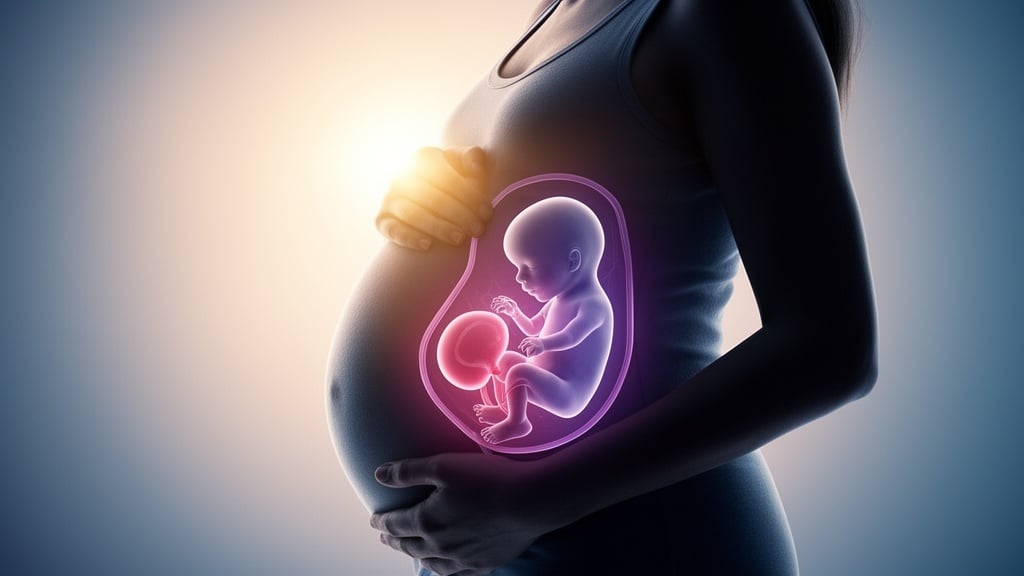
Prenatal exposure to endocrine disruptors can have permanent effects on development
A critical marker in this process is Insl3, a protein that signals the functional health of Leydig cells. Unlike testosterone, Insl3 doesn't recover as quickly after hormonal suppression, making it a much more sensitive early warning signal for detecting damage to testicular development.
Testosterone Reduction
Alteration of male hormonal balance during critical developmental windows.
Cryptorchidism
Boys born with undescended testicles, linked to low Insl3 levels.
Hypospadias
Anatomical malformations in the male reproductive tract.
TDS Syndrome
Direct link between the uterine environment and semen quality or testicular cancer in adulthood.
Transgenerational Effects
Exposure to endocrine disruptors during pregnancy can affect not only the fetus but also future generations through epigenetic modifications.
4 The Alarming Trend of "Early-Onset Cancers"

Younger generations face an increase in early-onset cancer incidence
Cancer is appearing earlier and earlier in people's lives. A massive analysis published in The Lancet (Sung et al., 2024) reveals that 17 of 34 analyzed cancers show increased incidence in younger generations.
Higher risk in 1990 generation vs 1955
Increase in younger generations
Cancers related to obesogens
This trend is not coincidental: 10 of these 17 increasing cancers are linked to obesity. This is where science connects the dots with "obesogens", chemicals that alter metabolism and that current generations have accumulated since childhood. Young people are carrying a biological risk "baggage" that will worsen as they age.
Current generations are carrying a biological risk "baggage" accumulated from childhood that will manifest more severely as they age.
— The Lancet, 2024
Increase in Cancer Incidence by Generation
Comparison of relative cancer risk between generation born in 1990 versus 1955 (Data: The Lancet, 2024)
5 The Low-Dose Paradox: Why Thresholds Fail

Scientific research demonstrates that endocrine disruptors act at ultra-low doses
Classical toxicology was based on "the dose makes the poison". But with disruptors like bisphenol-A or parabens, this rule is insufficient. While the EDEN project didn't observe response curves with unusual shapes or atypical "S-curves," it demonstrated something more alarming: traditional methods for establishing safety levels (like NOEL) are statistically weak.
Traditional Toxicology
- The dose makes the poison
- There's a safe threshold
- Individual substance evaluation
- Predictable linear effects
Endocrine Disruptors
- Act at ultra-low doses (pico-molar)
- No clear safe threshold
- Cocktail effect with other substances
- Non-linear responses
The real danger is that these substances act at minimal concentrations (pico-molar), similar to our body's natural hormones. Current "safety thresholds" are insufficient to protect us because they ignore the real biological activity at low doses. International management has been erratic, maintaining limits that often contradict scientific evidence funded by the European Union itself.
Response Curves: Traditional Toxicology vs Endocrine Disruptors
Endocrine disruptors can show effects at very low doses, challenging the traditional toxicology model
Regulatory Crisis
Safety limits established by international regulators often contradict scientific evidence about the biological activity of endocrine disruptors at ultra-low doses.
6 Plastics and Cosmetics: The Suspects in Your Home

Household products that can be sources of endocrine disruptor exposure
Exposure is constant and structural. According to Nicolás Olea's guide, the main routes include:
Processed Foods
Substances that leach from plastic containers and coated cans. BPA and phthalates migrate especially with heat and fats.
Cosmetics & Personal Care
Massive use of parabens and benzophenones (common in sunscreens). Direct absorption through the skin.
Drinking Water
Contaminants from obsolete piping, wastewater, and landfill filtration.
TEXB Methodology (University of Granada)
To measure this impact, the Total Estrogenic Xenobiotic Burden (TEXB) is used, analyzing "alpha and beta" fractions through high-resolution techniques (HPLC). This chemical load has been found massively in human tissues, significantly associating with breast cancer patients.
Individual vs. Collective Action
It's essential to understand that individual action—like choosing a paraben-free cosmetic—is valuable but limited. Major public health milestones, like lead elimination from gasoline or tobacco bans in public places, were achieved through political action, not just consumer decisions.
7 Conclusion: A Future That Requires Our Attention
We face a profound technological paradox, frequently pointed out by Dr. Olea: we're resorting to increasingly sophisticated assisted reproduction techniques to solve fertility problems that we ourselves have caused through chemical contamination of our environment.
Science has done its part by identifying the problem; now the challenge is regulatory and social. We must decide whether we're willing to accept this consumption model in exchange for our hormonal integrity.
Are we really willing to transform our production model to protect the next generation's health, or will we continue ignoring the warning signal that our own biology is already emitting?
Final Reflection
This is not just a scientific or medical problem. It's a question of generational justice and collective responsibility. The decisions we make today will determine the health of future generations.
Complete Bibliographic References
"Perspectives on endocrine disruption"
Gaceta Sanitaria, 2002; 16(3):250-6
https://scielo.isciii.es/scielo.php?script=sci_arttext&pid=S0213-91112002000300010
"Low-level exposure to multiple chemicals: reason for human health concerns?"
Environmental Health Perspectives, 2007; 115 Suppl 1:106-14
"Global patterns in excess body weight and the associated cancer burden"
CA: A Cancer Journal for Clinicians, 2019; 69(2):88-112
"State of the science of endocrine disrupting chemicals 2012"
World Health Organization and United Nations Environment Programme, 2013
"Advancing methods for assessing combined exposures to endocrine disruptors"
European Commission Research Project, FP6-2003-FOOD-3-A, 2006-2011
"Testicular dysgenesis syndrome: possible role of endocrine disrupters"
Best Practice & Research Clinical Endocrinology & Metabolism, 2006; 20(1):77-90
"Bisphenol-A and chlorinated derivatives in adipose tissue of women"
Reproductive Toxicology, 2007; 24(2):259-264
"EDC-2: The Endocrine Society's Second Scientific Statement on Endocrine-Disrupting Chemicals"
Endocrine Reviews, 2015; 36(6):E1-E150
"Endocrine-disrupting chemicals: an Endocrine Society scientific statement"
Endocrine Reviews, 2009; 30(4):293-342
"Estimating burden and disease costs of exposure to endocrine-disrupting chemicals in the European Union"
The Journal of Clinical Endocrinology & Metabolism, 2015; 100(4):1245-1255
Reference Center
Medical Research Laboratory, University of Granada
Directed by Dr. Nicolás Olea
Specialized in endocrine disruptor and environmental health research
www.ugr.es