
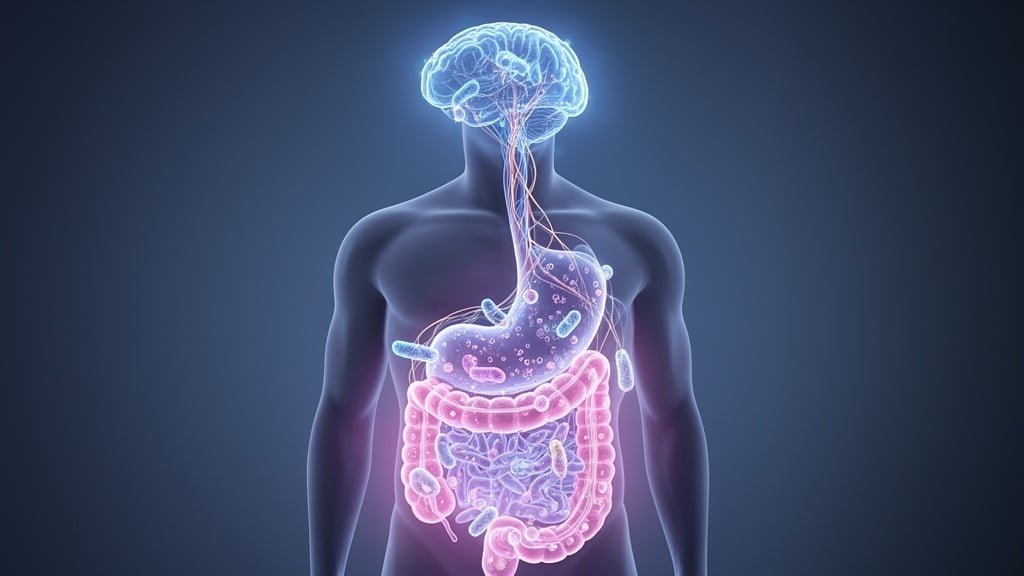
The gut-brain axis: a bidirectional communication highway between your microbiome and your brain
• Introduction: The Hidden World Within
Have you ever felt like your body has a mind of its own? That gut feeling that guides your decisions, those butterflies before a big moment, or that inexplicable connection between your stomach and your emotions? You're not imagining things. Science has discovered something extraordinary: inside you lives an entire ecosystem of trillions of bacteria that literally communicate with your brain, influence your emotions, and determine much of your health.
The Numbers Speak
Your body hosts approximately 39 trillion bacterial cells — more than your own human cells. Together, these microorganisms form what scientists call the microbiome, an invisible organ that weighs about 2 kilograms and has more genetic material than your entire human genome.
This isn't science fiction. It's the microbiome revolution, and it's changing everything we thought we knew about health, disease, and what it means to be human. Welcome to the era where we discover we've never been alone—and that's wonderful news.
1 Happy Gut, Happy Mind: The Emotion Connection
Have you ever wondered why you "feel" emotions in your stomach? Why does anxiety give you stomach cramps, or why does good news make you feel "butterflies"? The answer lies in the gut-brain axis—a biological superhighway that works in both directions.

The Vagus Nerve: Your Internal Internet Cable
Your gut and brain are connected by the vagus nerve, one of the longest nerves in your body. Think of it as a fiber optic cable carrying millions of signals per second. But here's what makes it fascinating: 90% of signals travel from the gut to the brain, not the other way around. Your gut literally tells your brain what to feel.
Mind-Blowing Fact: Your gut produces 95% of your body's serotonin—the happiness neurotransmitter. That antidepressant you're taking? Your gut bacteria might be doing the same job naturally.
Real Research, Real Results
In groundbreaking 2023 studies, scientists discovered that people with depression and anxiety have significantly different microbiomes than mentally healthy individuals. Even more impressively: when researchers transplanted gut bacteria from depressed people into germ-free mice, the mice developed anxiety-like behaviors. The opposite was also true—bacteria from happy people made mice more exploratory and brave.
From the Science
"The gut microbiome produces neurotransmitters, including GABA, dopamine, and serotonin. Disruptions in these microbial communities have been linked to mood disorders, autism, and even schizophrenia."
— Nature Reviews Neuroscience, 2024Your Bacteria, Your Personality?
This opens an incredible question: Are your thoughts entirely yours? Or are they partially influenced by the trillions of microbial companions sharing your body? Some researchers now believe that certain personality traits—like risk-taking, social behavior, and even food preferences—might be partially orchestrated by your microbiome trying to ensure its own survival.
2 Building Better Brains: The Early Years Matter
If you're a parent or planning to be one, this is where things get really interesting—and important. The first 1,000 days of a child's life (from conception to age 2-3) represent a critical window where the microbiome doesn't just affect the gut—it shapes the brain itself.

The Foundation Years
During pregnancy and infancy, a baby's microbiome is being established at the same time their brain is forming trillions of neural connections. These two processes aren't separate—they're intimately intertwined. The bacteria colonizing a baby's gut produce metabolites that cross into the bloodstream, reach the brain, and influence:
- Neuronal growth: How many brain cells form and where
- Myelination: The insulation that makes brain signals fast and efficient
- Blood-brain barrier integrity: The security gate that protects the brain
- Microglia activation: The brain's immune cells that prune unnecessary connections
The C-Section Effect
Babies born via cesarean section miss out on their mother's vaginal microbiome—their first bacterial "gift." Studies show these children have higher rates of asthma, allergies, and even autism. The medical community is now exploring "vaginal seeding" to restore this crucial microbial transfer.
The Autism Connection
One of the most compelling areas of research involves autism spectrum disorder (ASD). Children with autism consistently show different gut microbiomes than neurotypical children, with reduced diversity and altered bacterial species. In 2024, a landmark study showed that microbiome interventions in early childhood improved not just gastrointestinal symptoms, but also social behaviors and communication skills.
"We're seeing reproducible evidence that gut bacteria influence brain development through the production of short-chain fatty acids, particularly butyrate, which acts as a neuromodulator during critical developmental windows."
It's Never Too Late
While early childhood is critical, the good news is that the microbiome remains plastic throughout life. Studies show that microbiome interventions can improve cognitive function, learning, and memory even in teenagers and adults. Your brain's best friend is already inside you—it just needs the right care.
3 The Aging Connection: Why Centenarians Have Different Guts
What if the secret to living past 100 isn't in your genes, your diet, or your exercise routine—but in your gut bacteria? Researchers studying centenarians (people who live past 100) have discovered something remarkable: they have fundamentally different microbiomes than the rest of us.

The Centenarian Microbiome
Studies of super-agers from around the world—from Okinawa to Sardinia to the Blue Zones—reveal a consistent pattern. Their microbiomes have:
Higher Levels:
- Bacterial diversity
- Anti-inflammatory species
- Bile acid-transforming bacteria
- Butyrate producers
Lower Levels:
- Pro-inflammatory species
- Pathobionts (opportunistic pathogens)
- Proteobacteria (often harmful)
- Bacterial toxins
Inflammaging: The Silent Killer
As we age, most people develop what scientists call "inflammaging"—chronic low-grade inflammation that accelerates aging and causes age-related diseases. Where does this inflammation come from? Increasingly, research points to a disturbed microbiome leaking inflammatory molecules into the bloodstream.
The Leaky Gut Problem: As we age, the intestinal barrier becomes more permeable. Bacterial fragments called lipopolysaccharides (LPS) leak into circulation, triggering systemic inflammation linked to Alzheimer's, cardiovascular disease, and frailty.
Can We Reverse Aging?
Here's where it gets exciting. In 2024, researchers performed "young microbiome transplants" in aged mice—giving old mice the gut bacteria of young mice. The results were stunning:
- Improved cognitive function and memory
- Increased physical endurance and strength
- Enhanced immune response
- Reduced markers of inflammation
- Extended lifespan by 15-20%
Human trials are now underway. While we're years away from microbiome-based anti-aging therapies, the principle is clear: a youthful microbiome might be the key to healthier, longer lives.
Actionable Insight
You don't need to wait for futuristic treatments. Studies show that older adults who maintain high-fiber diets, stay physically active, and avoid unnecessary antibiotics preserve more diverse, youth-like microbiomes—and live healthier, longer lives.
4 The Superhero Spores: Nature's Ultimate Survivors
Not all bacteria are created equal. Some have evolved a superpower that makes them nearly indestructible: they can form spores—microscopic time capsules that can survive stomach acid, antibiotics, heat, radiation, and even the vacuum of space. These bacterial superheroes are revolutionizing how we think about probiotics and gut health.
What Are Spore-Forming Bacteria?
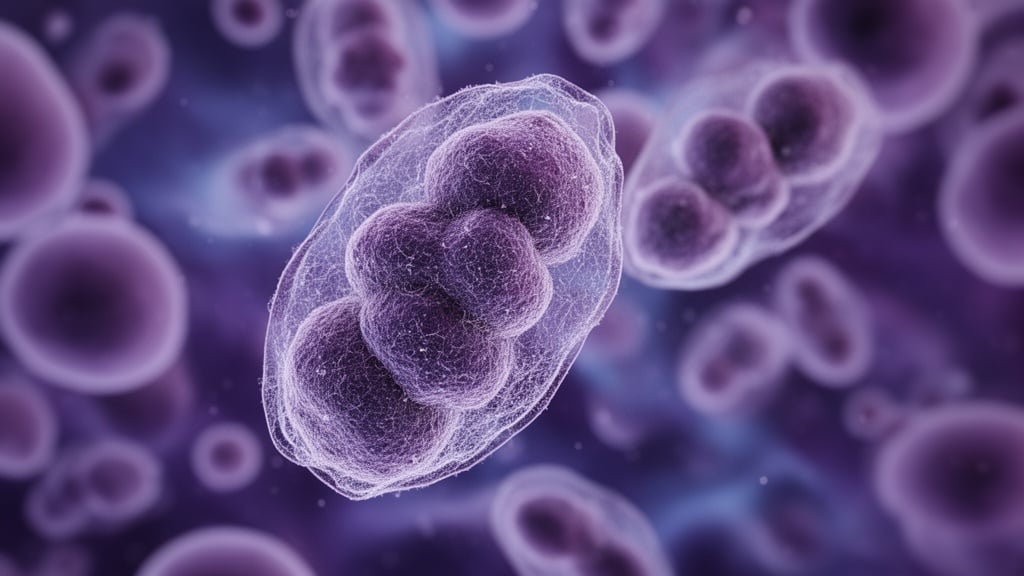
Spore-forming bacteria, particularly from the Bacillus genus (like Bacillus subtilis, B. coagulans, B. clausii), have existed for millions of years. When conditions get tough—no food, extreme temperatures, toxic environments—they don't die. Instead, they transform into dormant spores with thick protective coats, essentially becoming seeds that wait for better times.
Regular Probiotics
- 95-99% die in stomach acid
- Require refrigeration
- Short shelf life
- Transient—don't colonize
- Easily killed by antibiotics
Spore-Based Probiotics
- 100% survive stomach acid
- Shelf-stable, no refrigeration
- Years-long viability
- Can temporarily colonize
- Survive most antibiotic courses
The Science Behind Spores
When you ingest spore-forming probiotics, they travel safely through your acidic stomach (where most bacteria would die) and reach your intestines. There, sensing the perfect environment—warmth, nutrients, neutral pH—they "wake up" and transform back into active bacteria. This process, called germination, takes only minutes.
Once active, these bacteria get to work:
- Immune training: They educate your immune system, teaching it to distinguish friends from foes
- SCFA production: They ferment fiber into short-chain fatty acids that heal your gut lining
- Pathogen control: They produce antimicrobial compounds that keep harmful bacteria in check
- Ecological restoration: They create conditions that help beneficial bacteria thrive
Real-World Applications
Spore-based probiotics are showing remarkable results in clinical trials:
Reduction in IBS symptoms in 12-week study
Survival rate through antibiotic treatment
Decrease in inflammatory markers (CRP, IL-6)
Increase in beneficial butyrate-producing bacteria
Clinical Breakthrough
In 2025, the FDA approved the first spore-based probiotic for preventing Clostridioides difficile recurrence after antibiotic treatment—a condition that kills 30,000 Americans annually. The approval marked a turning point in recognizing spores as legitimate therapeutics.
The Future: Designer Spores
Scientists are now engineering spore-forming bacteria to deliver targeted therapies. Imagine spores that wake up only in the presence of specific pathogens, or spores programmed to produce missing enzymes for genetic diseases. This isn't science fiction—it's happening in labs right now, with human trials expected within 2-3 years.
5 Feed Your Inner Garden: What Your Bacteria Really Want
You are what you eat—but more accurately, you are what your gut bacteria eat. Every meal is a choice: are you feeding the bacteria that make you healthy, or the ones that make you sick? The good news? Your microbiome can change remarkably quickly—sometimes within 24-48 hours of dietary changes.
The Fiber Gap Crisis
Our ancestors consumed 100-150 grams of fiber daily. Today, the average American gets barely 15 grams. This isn't just a digestion problem—it's a microbiome starvation crisis. When you don't eat enough fiber, your gut bacteria don't just sit around hungry—they start eating you instead, munching on the protective mucus layer of your intestines.
The Mucus Problem: When fiber-deprived, bacteria secrete enzymes to break down your intestinal mucus for food. This thins your protective barrier, increases inflammation, and raises the risk of inflammatory bowel disease and colon cancer.
The Microbiome Superfood Guide
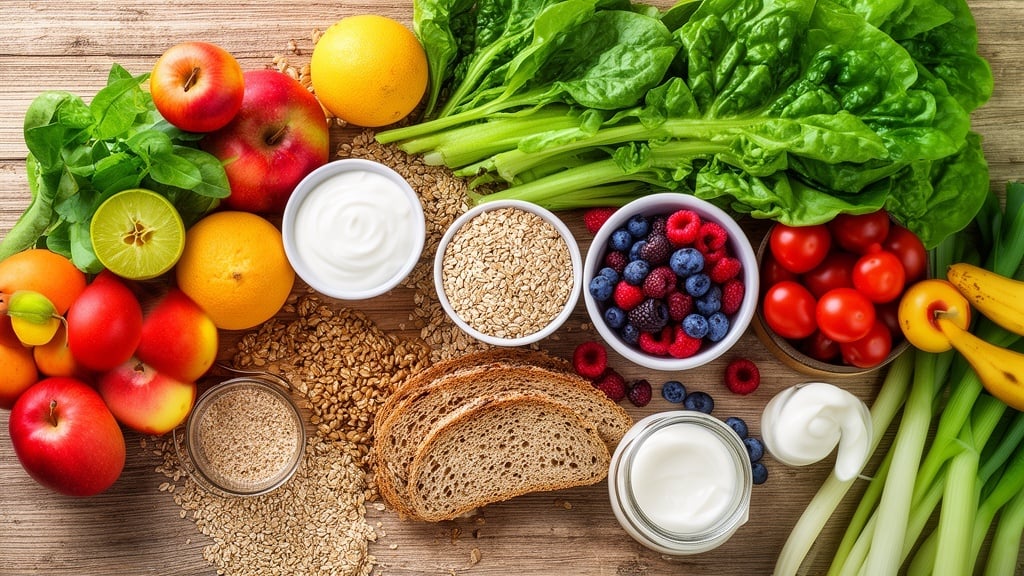
Not all foods are equal in the eyes of your microbiome. Here's what the latest research shows your bacteria thrive on:
Prebiotics: Bacteria Food
These are fibers humans can't digest, but bacteria love:
- Inulin sources: Jerusalem artichokes, chicory root, garlic, onions, leeks
- Resistant starch: Cooked and cooled potatoes/rice, green bananas, oats
- Beta-glucans: Oats, barley, mushrooms
- Pectin: Apples, citrus fruits, carrots
Probiotics: Live Reinforcements
Foods containing live beneficial bacteria:
- Fermented vegetables: Sauerkraut, kimchi, pickles (unpasteurized)
- Dairy ferments: Yogurt, kefir, aged cheeses
- Fermented soy: Miso, tempeh, natto
- Beverages: Kombucha, water kefir
Polyphenols: Bacterial Enhancers
Plant compounds that beneficial bacteria convert into powerful metabolites:
- Berries: Blueberries, blackberries, strawberries
- Dark chocolate: 70%+ cocoa (yes, really!)
- Green tea: Rich in EGCG
- Extra virgin olive oil: Oleuropein and oleocanthal
The 30-Plant Challenge
The landmark American Gut Project analyzed microbiomes from over 10,000 people and found one clear pattern: people who ate 30+ different plant foods per week had the most diverse, healthiest microbiomes—regardless of diet type (omnivore, vegetarian, vegan).
Start Your Challenge
This week, aim for 30 different plant foods. Count everything: fruits, vegetables, nuts, seeds, legumes, whole grains, herbs, spices. Variety is the key—each plant feeds different bacterial species, creating a thriving, diverse ecosystem.
What to Avoid: The Microbiome Destroyers
Just as important as what to eat is what to avoid. These substances devastate your microbiome:
Artificial Sweeteners
Aspartame, sucralose, and saccharin alter microbiome composition and can induce glucose intolerance—even though they have no calories. Natural sweeteners like stevia show less impact.
Emulsifiers
Carboxymethylcellulose and polysorbate-80 (found in ice cream, salad dressings) erode the mucus layer and promote inflammation. Check ingredient labels.
Unnecessary Antibiotics
Each antibiotic course can reduce microbiome diversity by 25-50%, with some species never recovering. Take them when necessary, but not "just in case."
Ultra-Processed Foods
Foods with ingredients you can't pronounce typically contain additives that harm beneficial bacteria while promoting pathogenic ones. Stick to whole foods whenever possible.
The 3-Day Transformation
Perhaps the most encouraging research finding: significant microbiome changes can happen within 3-5 days of dietary shifts. In one study, switching from a high-fat, low-fiber diet to a high-fiber, plant-based diet increased beneficial bacteria production of anti-inflammatory compounds by 300% in just 72 hours.
Start Today
Your next meal is an opportunity to reshape your microbiome. Add one fermented food, one prebiotic-rich vegetable, and aim for a rainbow of colors on your plate. Your trillions of bacterial partners will thank you—and your body will feel the difference.
• The Microbiome Revolution: You Are Not Alone
We've journeyed through the invisible world inside you—a world where trillions of bacteria shape your emotions, build your brain, determine how you age, and respond to every food choice you make. This isn't fringe science anymore. This is the frontier of modern medicine, and it's rewriting the rules of health.
The implications are profound: You are not a single organism, but an ecosystem. The bacteria in your gut aren't passengers—they're partners. They've coevolved with us for millions of years, and we literally cannot be healthy without them.
Key Takeaways
- Your gut bacteria produce neurotransmitters that influence mood, anxiety, and depression
- The microbiome shapes brain development in early childhood and influences lifelong mental health
- Centenarians have distinctly different microbiomes—younger, more diverse, less inflammatory
- Spore-forming probiotics represent a breakthrough in microbiome restoration
- Your diet can transform your microbiome within days—every meal is a choice
The microbiome revolution is personal. It means your health is not predetermined by your genes. It's dynamic, responsive, and within your control. What you feed your bacteria today determines your health tomorrow.
At GenBiome, we're at the forefront of this revolution, providing sequencing and analysis services that decode your unique microbiome. Because the future of personalized medicine isn't just about your human genome—it's about the 39 trillion partners you're sharing your life with.
Explainer Video
Discover in 90 seconds how gut bacteria control your mind and health
Duration: 90 seconds | Language: English | Format: 16:9 Full HD
Scientific References
"The Microbiota-Gut-Brain Axis."
Physiological Reviews, 2019; 99(4):1877-2013
"Revised Estimates for the Number of Human and Bacteria Cells in the Body."
PLoS Biology, 2016; 14(8):e1002533
"The neuroactive potential of the human gut microbiota in quality of life and depression."
Nature Microbiology, 2019; 4:623-632
"The Microbiome and Host Behavior."
Annual Review of Neuroscience, 2017; 40:21-49
"Gut Microbe to Brain Signaling: What Happens in Vagus..."
Neuron, 2019; 101(6):998-1002
"The Gut Microbiota Mediates the Anti-Seizure Effects of the Ketogenic Diet."
Cell, 2018; 173(7):1728-1741
"Gut Microbiota and Extreme Longevity."
Current Biology, 2016; 26(11):1480-1485
"American Gut: an Open Platform for Citizen Science Microbiome Research."
mSystems, 2018; 3(3):e00031-18
"Diet-induced extinctions in the gut microbiota compound over generations."
Nature, 2016; 529:212-215
"Diet-microbiome interactions in cancer."
Cancer Cell, 2025; 43:680-707
"Effects of targeted delivery of propionate to the human colon on appetite regulation, body weight maintenance and adiposity in overweight adults."
Gut, 2015; 64:1744-1754
"Our Gut Microbiome: The Evolving Inner Self."
Cell, 2017; 171(7):1481-1493
"The butyrate-producing and spore-forming bacterial genus Coprococcus as a potential biomarker for neurological disorders."
Gut Microbiome, 2023; 4:e16
"The human gut microbiota and glucose metabolism: a scoping review of key bacteria and the potential role of SCFAs."
The American Journal of Clinical Nutrition, 2022; 116(3):862-874
"An umbrella review of the evidence associating diet and cancer risk at 11 anatomical sites."
Nature Communications, 2021; 12:4579
"Gut Microbiota-Mediated Biotransformation of Medicinal Herb-Derived Natural Products: A Narrative Review of New Frontiers in Drug Discovery."
Journal, 2024; 7(3):351-372
"Butyrate producers, 'The Sentinel of Gut': Their intestinal significance with and beyond butyrate, and prospective use as microbial therapeutics."
Frontiers in Microbiology, 2023; 13:1103836