
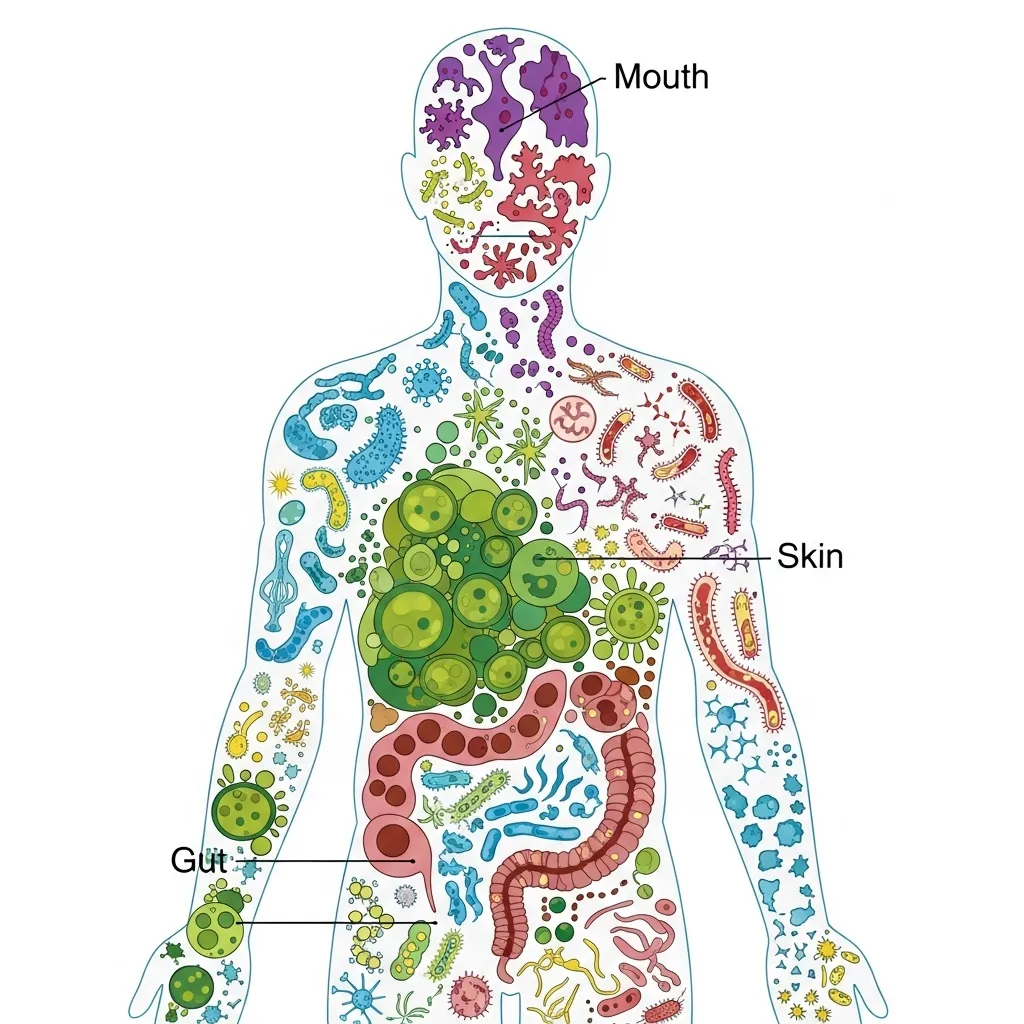
Coffee doesn't just wake your brain—it cultivates specialized bacteria in your gut
• Introduction: Beyond the Caffeine
Your morning coffee does more than wake you up—it's actively shaping the bacterial ecosystem in your gut.
A groundbreaking study in Nature Microbiology analyzed 22,000 people and 54,000 samples and discovered something remarkable: coffee is the #1 food that shapes your microbiome—more than any other food tested.
The surprise? A specific bacterium thrives on coffee and converts its compounds into health-promoting molecules. This microbe is 4-8 times more abundant in coffee drinkers, and the effect works even with decaf.
Study Overview
- Participants: 22,867 individuals
- Total samples: 54,000+
- Foods evaluated: 150+
- Publication: Nature Microbiology, 2024
- Predictive accuracy: AUC 0.89-0.93
1 Coffee: The #1 Food That Shapes Your Microbiome
Researchers tested over 150 different foods in 22,867 people. The winner? Coffee. It had the strongest effect on gut bacteria—stronger than milk, yogurt, or any other food.
How Powerful is the Effect?
93% accuracy in identifying coffee drinkers just by looking at their gut bacteria.
That's comparable to a clinical-grade diagnostic test.
The takeaway: Coffee isn't just a beverage—it's a powerful microbiome modifier. Your daily cup is actively recruiting specific bacteria in your gut.
2 Meet Your Personal Coffee-Loving Bacterium
The star of the show is a bacterium called Lawsonibacter asaccharolyticus. Think of it as your gut's personal microscopic barista.
What does it do?
- Produces butyrate—a compound that protects your intestinal lining
- Processes coffee compounds into beneficial molecules that enter your bloodstream
- May mediate coffee's anti-inflammatory effects
The Coffee Effect
Coffee drinkers (3+ cups/day): 4.5-8× more abundant
Moderate drinkers (1-2 cups/day): 2.5× more abundant
Non-drinkers: Baseline levels
The bottom line: This microbe thrives on coffee and transforms it into health benefits.
3 Good News for Decaf Drinkers: It's Not the Caffeine
The microbiome benefits work even with decaffeinated coffee. That means it's not about the caffeine—it's about the chemistry of the bean itself.
What's Really Driving the Effect?
Three key compounds (present in decaf):
- Chlorogenic acid—powerful antioxidant
- Quinic acid—processed by gut bacteria
- Polyphenols—feed beneficial microbes
Clinical implication: If you're sensitive to caffeine or have cardiovascular concerns, decaf offers similar microbiome benefits without the stimulant effects.
Whether regular or decaf, the chemistry of the coffee bean recruits specific bacterial populations in your gut.

Coffee selectively recruits modern gut bacteria that metabolize its phenolic compounds
4 A 21st-Century Bacterium
Here's the most fascinating part: L. asaccharolyticus is a modern phenomenon.
Where Is This Microbe Found?
Modern urban populations: 75% prevalence
Rural, non-Westernized populations: 2.4% prevalence
Ancient human microbiomes: 5.4% (2 of 37 samples)
Non-human primates: 0.5% (1 of 201 samples)
Our industrialized, coffee-drinking societies have essentially cultivated a specific microbe that was almost entirely absent in our ancestors.
What does this mean? Coffee consumption is acting as a selective pressure—favoring the growth of this modern bacterium. In just 300 years since coffee became widespread, our gut ecosystems have shifted dramatically.
Our industrialized, coffee-heavy societies have essentially farmed a specific microbe that was almost entirely absent in our ancestors and is still missing in our closest evolutionary relatives.
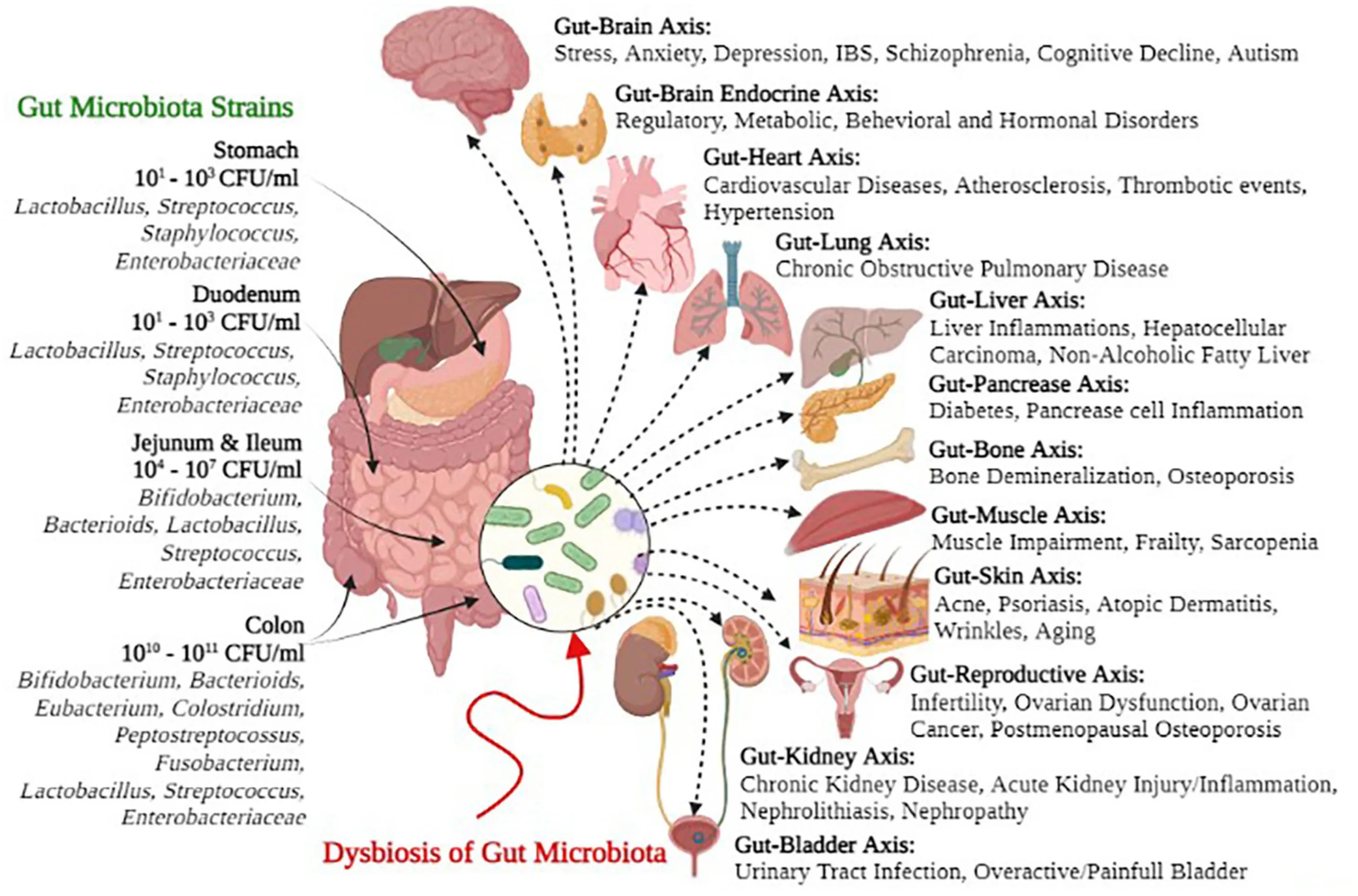
Lawsonibacter asaccharolyticus and other butyrate-producing bacteria respond to both regular and decaf coffee
5 Coffee Feeds the Good Bacteria
Researchers tested this directly: they grew L. asaccharolyticus in a lab with coffee added. The results?
Growth Experiment Results
L. asaccharolyticus: +250-350% growth with coffee
E. coli: -42% growth (inhibited)
What this means: Coffee acts like a selective fertilizer—it feeds the beneficial bacteria while suppressing potentially harmful ones.
For regular coffee drinkers, this creates a "fitness advantage" for L. asaccharolyticus, allowing it to thrive and dominate in your gut.
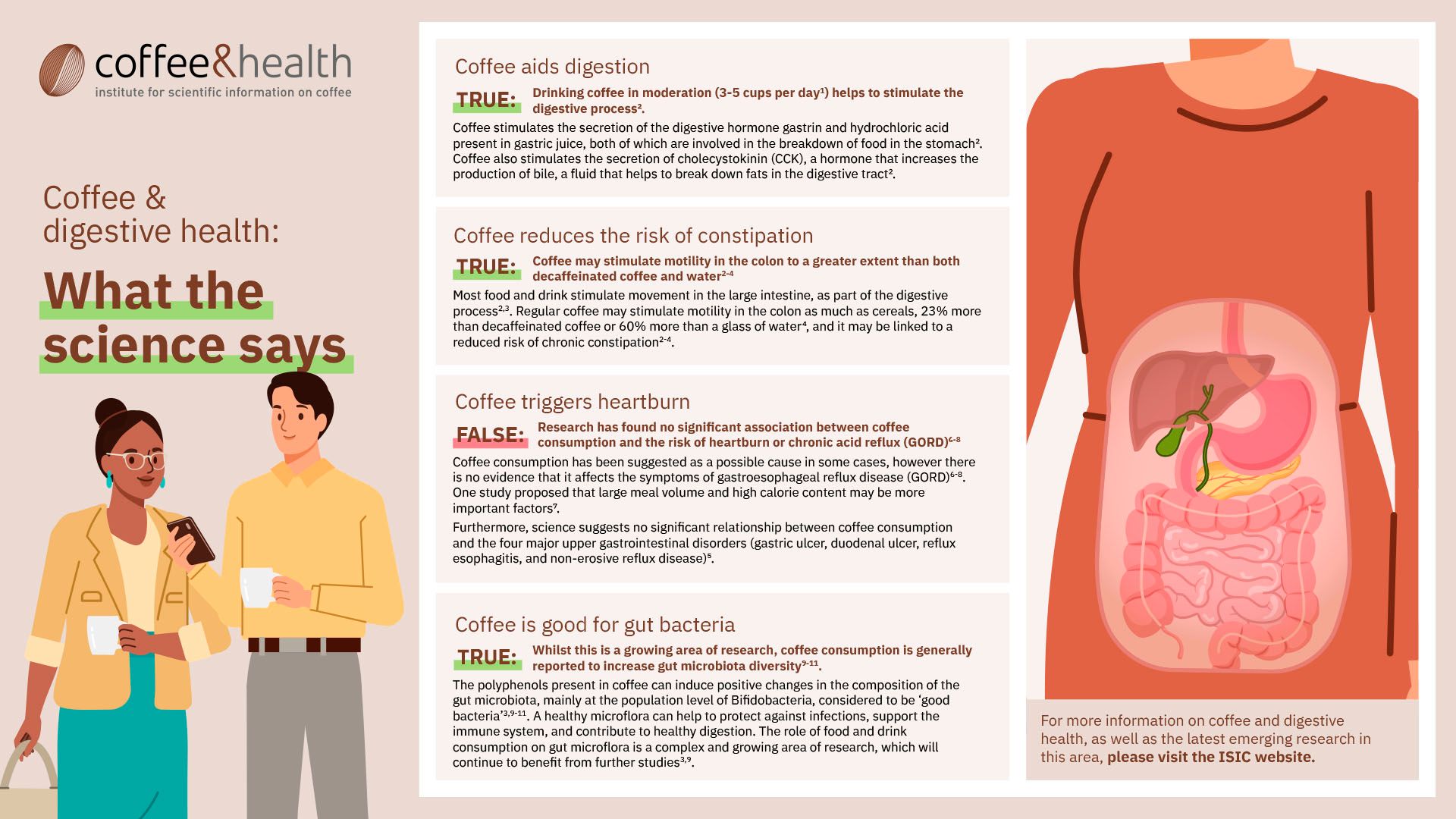
Habitual coffee consumption creates selective pressure favoring modern bacteria in the human microbiome
6 The Secret Ingredient: Quinic Acid
How does this bacterium turn coffee into health benefits? The key is a compound called quinic acid.
The process:
- You drink coffee (containing chlorogenic acid)
- L. asaccharolyticus breaks it down into quinic acid
- Quinic acid and its derivatives enter your bloodstream
- These molecules may mediate coffee's health benefits
L. asaccharolyticus isn't just sitting there—it's actively working, converting coffee compounds into beneficial molecules.
Potential health effects: Cardiovascular protection, metabolic regulation, anti-inflammatory effects, and neuroprotection.
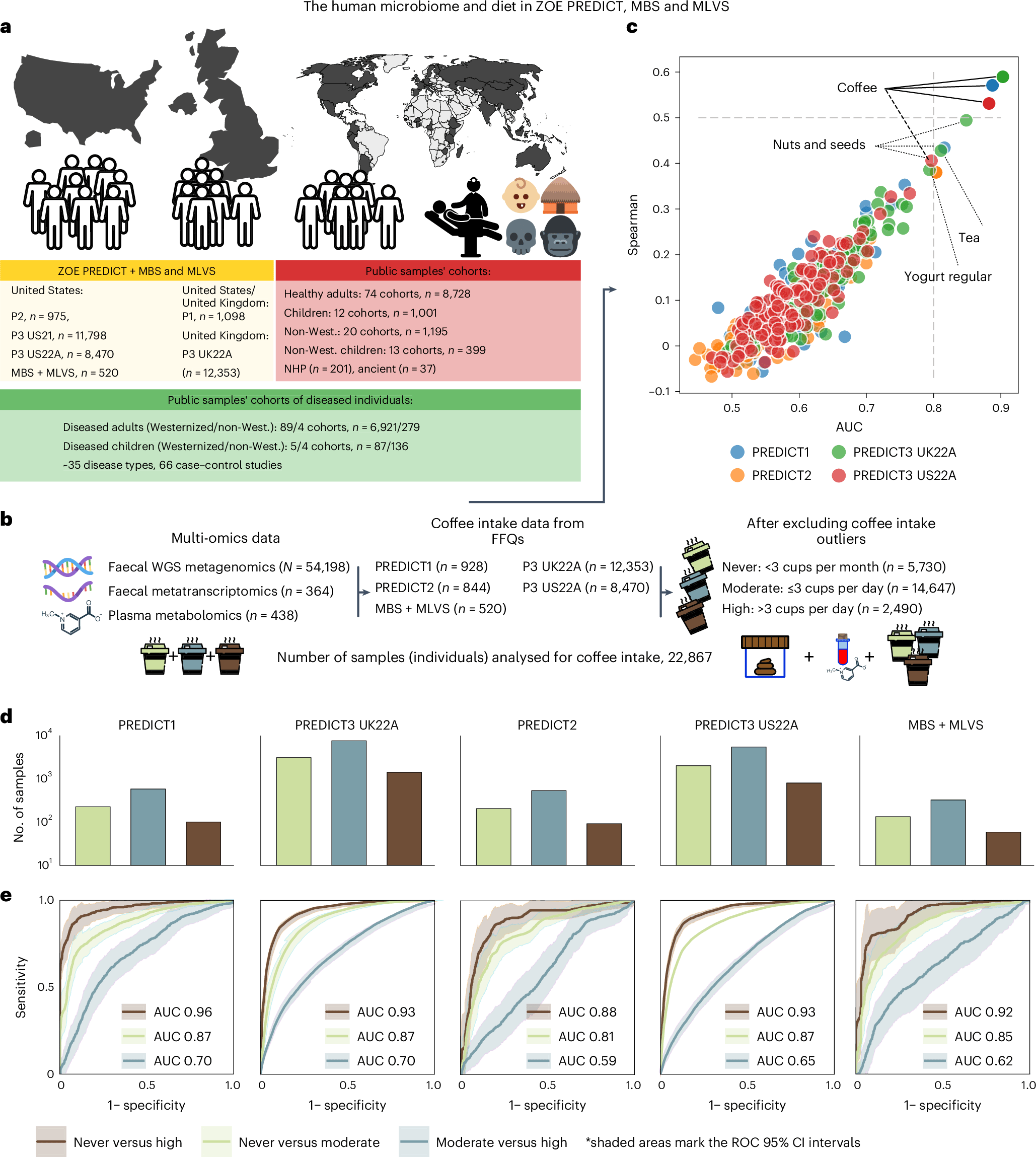
The Nature Microbiology study analyzed 22,000 participants and 54,000 samples to identify the coffee-microbiome connection
• What This Means for You
Key Takeaways
Coffee is the #1 microbiome influencer
93% accuracy in identifying coffee drinkers from gut bacteria alone.
One bacterium does the heavy lifting
L. asaccharolyticus is 4.5-8× more abundant in coffee drinkers.
Decaf works too
It's the polyphenols and chlorogenic acids—not the caffeine.
A modern phenomenon
75% prevalence today vs. 2.4% in rural populations, 5.4% in ancient humans.
Coffee feeds the good guys
+350% growth of beneficial bacteria, -42% of potentially harmful ones.
Quinic acid is the secret mediator
Gut bacteria convert coffee into beneficial bloodstream metabolites.
Practical Guide: What Coffee to Choose?
For maximum microbiome benefit:
- Amount: 3+ cups/day for optimal effect
- Type: Regular or decaf—both work
- Preparation: Brewed coffee (moka, drip, French press) over instant
- Quality: Higher polyphenol content in darker roasts
Your morning coffee isn't just waking you up—it's cultivating a specialized bacterial workforce that transforms its compounds into health benefits.
Scientific References
- Asnicar F, et al. (2024). Microbiome-wide association studies link coffee consumption with butyrate-producing Lawsonibacter asaccharolyticus. Nature Microbiology. DOI: 10.1038/s41564-024-01889-y
- Poole R, et al. (2017). Coffee consumption and health: umbrella review of meta-analyses of multiple health outcomes. BMJ, 359:j5024. DOI: 10.1136/bmj.j5024
- Zhao Y, et al. (2023). Coffee consumption and cardiovascular diseases: a Mendelian randomization study. Nutrients, 15(6):1331. DOI: 10.3390/nu15061331
- Mills CE, et al. (2017). The effect of chlorogenic acids on health and inflammation: a review. Comprehensive Reviews in Food Science and Food Safety, 16(4):667-682. DOI: 10.1111/1541-4337.12273
- Turnbaugh PJ, et al. (2018). The human microbiome project: exploring the microbial part of ourselves in a changing world. Nature, 449(7164):804-810. DOI: 10.1038/nature06244
Note: This article is based on peer-reviewed scientific research. For the complete study, consult the primary publication in Nature Microbiology (2024).